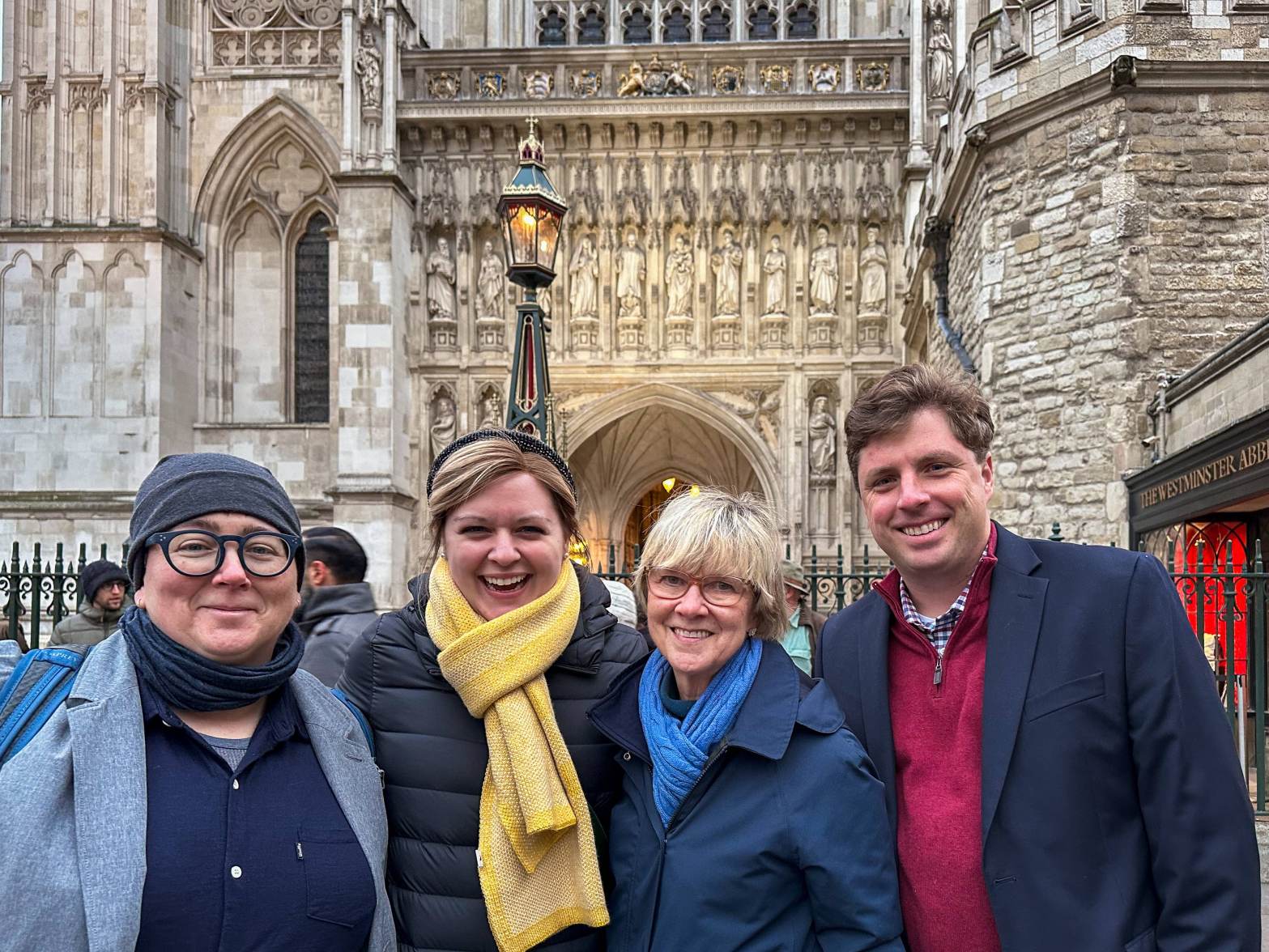
Pictured: Diocese of Alabama Participants outside of Westminster Abbey following Evensong, January 14, 2024. (L-R) Canon Kelley Hudlow, Jordan Rippy, Bishop Glenda Curry, and Rev. Jack Alvey.
“You’ve got to learn to cook from the fridge,” Sally Gaze declared with a warm smile. Her pale blue tweed jacket and heavy plaid skirt with tights showed she was well prepared for the chill of January in London. Sally serves as the Archdeacon for Rural Mission for the Diocese of Suffolk. Prior to this role, she had been a priest serving in rural parishes. She was our second speaker on our first day. While she was unassuming in her presentation, she would offer some words of deep wisdom that I carried with me over the next several days of “Learning from London.”
“Learning from London” is a course offered through Bexley Seabury Seminary, an Episcopal Seminary based in Chicago offering hybrid formation for all orders of ministry. The Rev. Dr. Jason Fout serves as the creator of and instructor for the course, which grows out of his research. The premise for the course, as outlined in the syllabus, was simple:
Since 1993, the Diocese of London has grown around 70% in terms of regular attendance, giving has more than doubled, and the diocese has been at the forefront of church planting among Anglican churches in the developed world. This is very much a “Man bites dog” headline! So many of us have become accustomed to loss and decline, resigning ourselves to it, telling ourselves that we now live in a post-Christian, secular, multi-cultural, multi-religious, cosmopolitan setting, and that tells against growing churches. But here’s the thing: London is more of all of those. And they’ve grown. So, what can learn from them?
Searching for an answer to that question, I joined Bishop Glenda Curry, Jordan Rippy, and the Rev. Jack Alvey for the January 2024 cohort of “Learning from London.” This iteration of the course was geared toward bishops and diocesan leaders. While our focus would remain on London, the scope of our conversations would broaden to include leaders working in rural areas, such as Sally Gaze.
So here are a few things I learned from my time in London.
Learn to cook from the fridge.
Sally Gaze offered this remark in concluding her presentation on rural ministry. Her metaphor was simple, dinner had to be made and there was not always time to pop over to the grocery to get special ingredients. Often you just must open the fridge and the cupboards and use what is there. Sally’s observation is not so much about making do with less but is about realizing the abundance of resources (people, gifts, opportunities) that are already at hand. It is an invitation to move from an idea of scarcity into a new appreciation of abundance.
Sally now leads Lightwave a Christian community focused on shining the light of Jesus in rural areas. They meet in small groups and are involved in combatting isolation and poverty, engage in youth work, care for creation, and agricultural chaplaincy. Each group is built on five practices:
- All Involved – Everyone is included and valued, whoever they are. Everyone has a role to play.
- Becoming Disciples – The purpose of the group is to encourage us to love and live more like Jesus.
- Creating Community – The group will “be real” with each other – honest about the things we go through ourselves and respond in a loving way to each other. Caring for each other enables us to care for our wider community too.
- Doing Evangelism – Being as well as telling good news together. Giving other people the opportunity to learn about Jesus.
- Encountering God – Meeting with God It is God who helps us and changes us.

Recognize the good in a place.
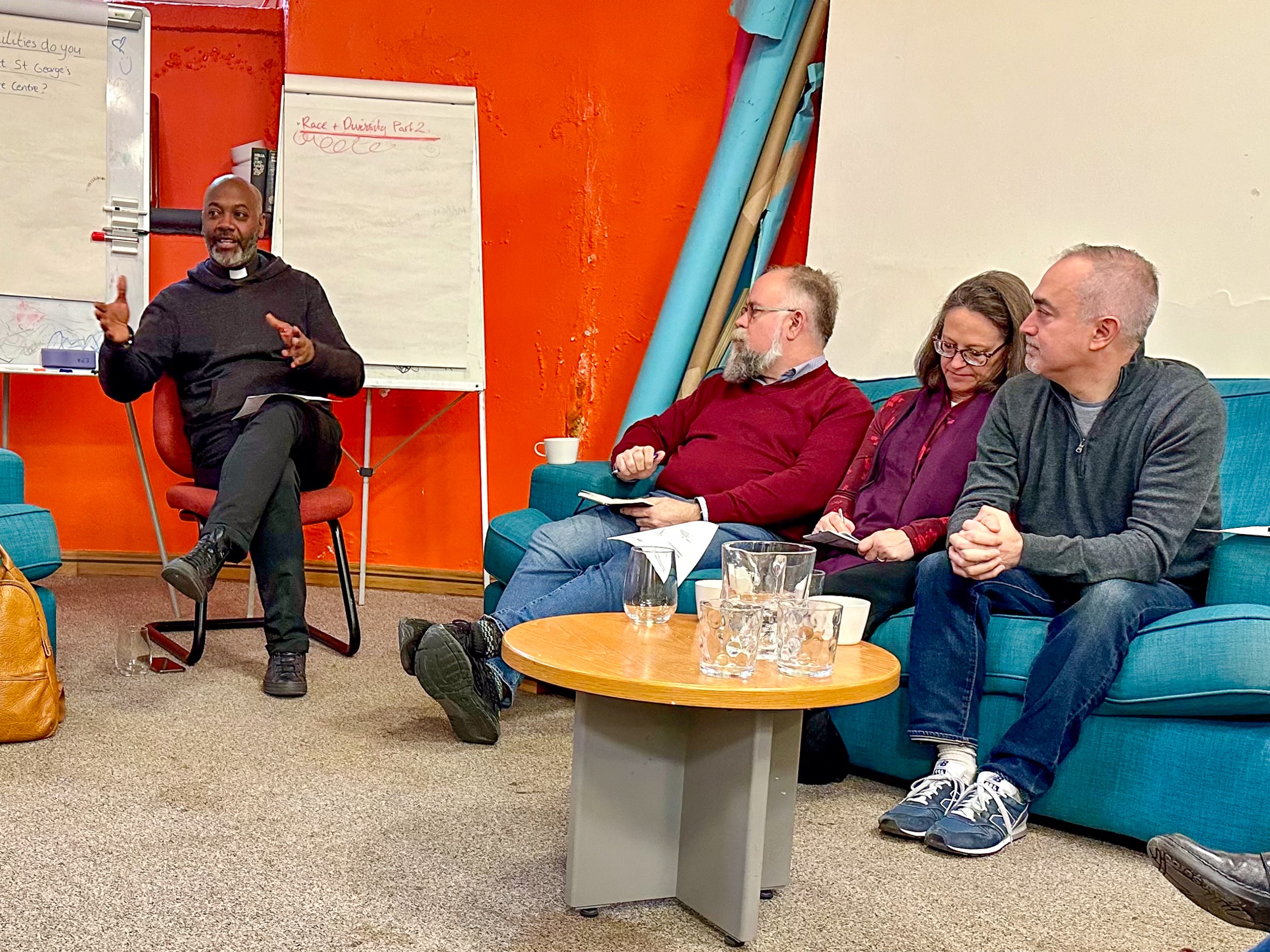
Fr. Richard Springer greeted us outside St. George’s in the East and ushered us downstairs to a sitting area. We hung our coats and took turns receiving hot tea or coffee, before finding a seat to hear their story. The parish was built in the 19th century and bombed in the Blitz. A new worship space was created from the ruins in the 1960s. By the 2000s, membership diminished to 20 or so. A change in leadership provided an opportunity for a creative partnership with The Centre for Theology and Community, which located its offices at the church. Using community organizing principles, St. George’s built the parish community and connected in new ways to the neighborhood. This led to growth in the Sunday service and allowed the calling of a new rector (Fr. Richard). As the numbers grew, St. George’s became a resource parish and sought out new expressions of faith, including a Choir Church, The Open Table (worshipping with the homeless people), and a Portuguese-speaking congregation.
Fr. Richard described St. George’s as a modern Anglo-Catholic parish centered in the Eucharist, “which gives fuel for a week that we don’t yet know about.” They are a community that understands that power is not finite and that it matters who gets to speak and be heard. Most of the growth in the parish comes from people who live within walking distance of the church and have encountered St. George’s at work in the neighborhood. Fr. Richard remarked that St. George’s had been the sort of parish that a priest served while on the way to a bigger church. For him, it is important to recognize and value the good in the place he serves.
Give away your best.
When Phil Williams walked up to greet the group outside of St. Paul’s in Shadwell, he was certainly not who I expected to be leading a charismatic-evangelical church that was part of the Holy Trinity Brompton network. Phil was stocky and in jeans, bundled up against the damp cold. As we walked through the church and grounds, he explained that St. Paul’s was the church of the sea captains. Established in 1656, seventy-five sea captains were buried there. John Wesley preached there. Jane Randolph, the mother of Thomas Jefferson, was baptized there.
Walking into the Georgian church, we were greeted by an open-plan design, children’s toys, and a central stage. On a wall of the sanctuary hung a bulletin board that named and briefly described the churches that St. Paul’s had planted. The parish itself was re-planted in 2005, led by Ric Thorpe and a group from Holy Trinity Brompton. As the church flourished, it became a resource church. As described by (now) Bishop Ric Thorpe, a resource church “is designated by its bishop to be a church-planting church which trains leaders to resource and support mission across a diocese.” Phil explained that St. Paul’s had planted eight churches, and two of those church plants had gone on to plant churches.
In the meeting room of the church house, hands being warmed by hot tea or coffee, Phil explained that the vision of St. Paul’s includes church planting. This means that the church intentionally raises up and releases leaders (lay and ordained) to plant churches. In the past ten years, St. Paul’s supported 30 people in the ordination process. Phil admitted that sending leaders out can be painful and cause grief, but he trusts that the Holy Spirit will move and create something new. Reflecting on the fact that St. Paul’s will soon plant another church, meaning more leaders will be sent, Phil explained that the call was to “give away their best.”

Decide to not be afraid.
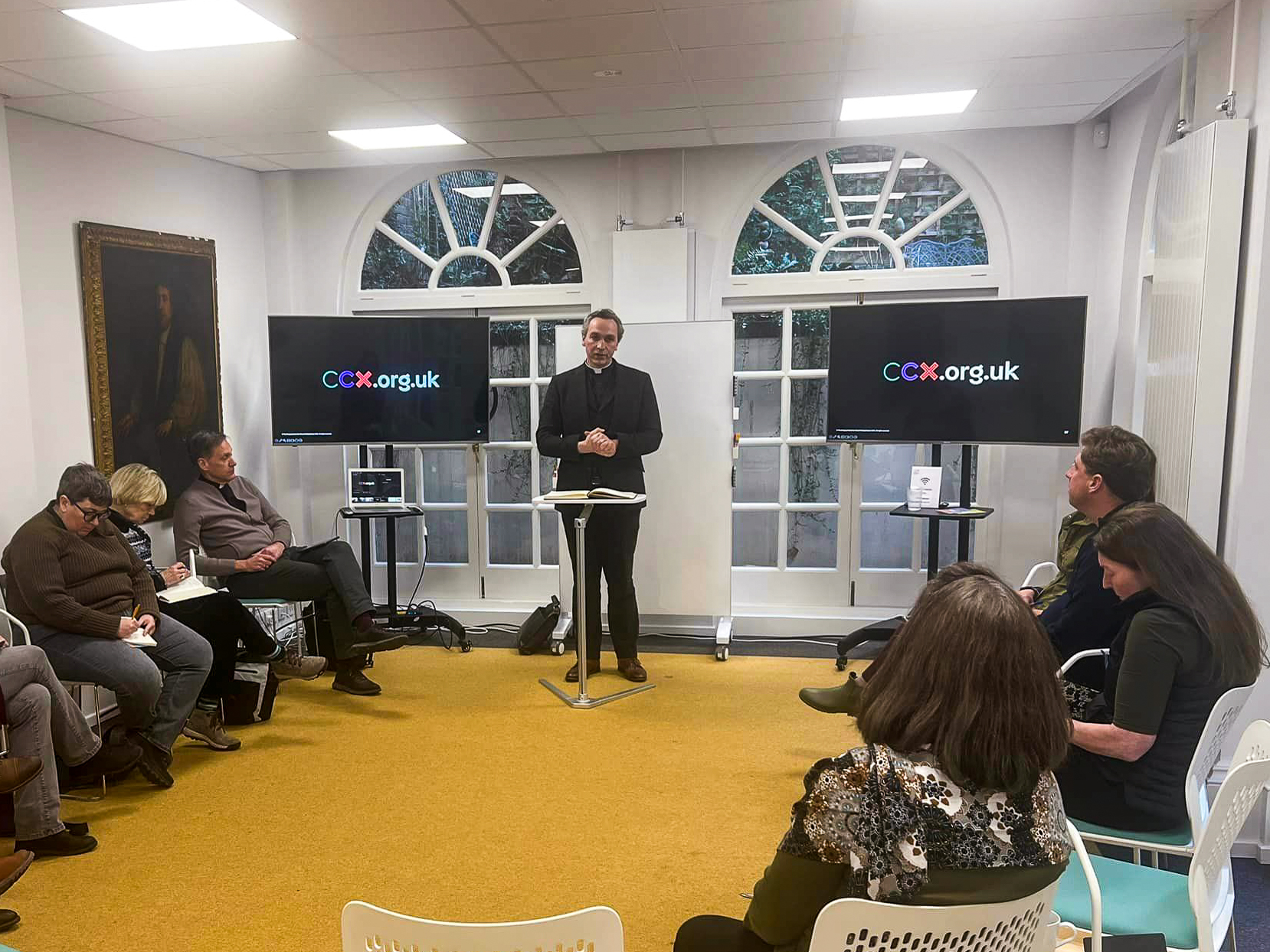
The Old Deanery, across from St. Paul’s Cathedral, houses the offices of the Bishop of London and the Gregory Centre for Church multiplication. Our host, H Miller, explained that the portraits on the wall were all of bishops that had some problematic stories, so they were hung here in the basement. It is here that we met Fr. Ross Gunderson, a Scotsman and church planter dressed in a three-piece tweed suit.
Fr. Ross told us that when he arrived in the fall of 2018 at St. Etheldreda’s, nicknamed “St. Eth’s,” there was only a small group of people regularly attending worship. Fr. Ross began to search for ways to open the church to the neighborhood. A playgroup was started. He announced a Christmas Carol service with the goal of filling the church, which they did with 400 people attending. Numbers at regular Sunday services were smaller, but for major observances, they were able to create meaningful Anglo-Catholic worship that connected to the community. When the pandemic closed the churches, St. Eth’s became a neighborhood charity, delivering food and medicine. They maintained an online presence and grew. Post-pandemic, St. Eth’s partnered with a local school and continued to deepen their connection with the community.
Fr. Ross identified some key practices of St. Eth’s. Going outside the walls of the church as much as possible. Setting targets (and celebrating making them). Keeping the church doors open constantly. Embracing diversity of leadership and growth. Understanding that the sacraments are the essence of the community of St. Eth’s. Remarking on his early days at St. Eth’s, Fr. Ross said, “I decided to not be afraid and to just believe that everything was possible.”
Intend to grow.
The Gregory Centre for Church Multiplication introduced us to the idea of church multiplication. This is language developed by Bishop Ric Thorpe based on descriptions of the development of the early church in the Book of Acts. The Centre seeks to help leaders and communities to engage intentionally to multiply Gospel-sowing, disciples, leaders, and churches. The mission of the Centre is to help the Church reach new people, in new and renewed ways, which supports the Diocese of London’s vision to encourage every parish to start something new to reach new people. They do this through offering the Grow Course, leadership development, and coaching. The intention is that each new community or offering that is planted, will grow and in multiply to create something new, too.
Starting new missional communities to reach new people is not just confined to traditional worship services or parish programs. We were introduced to the Rev. Dr. Mike Moynagh, who leads the Greenhouse for the Church of England. The Greenhouse helps support the creation and leadership of missional communities, a.k.a Fresh Expressions, by offering a learning community and guidance on the missional journey. The Missional Journey keeps teams focused and intentional as they work towards their mission goals. The Journey is a cyclical process that begins with listening to the context and to God. The team then discerns a simple way to love the people around them, and in doing so they build community. In the context of these relationships, the team shares the Gospel in a way that is appropriate to the context. As people grow in their faith, gradually a worshipping community emerges that is connected to the wider church. Then the new community repeats the process.
Caveat – the established Church is different.
Now for the obvious: the Church of England is different than the Episcopal Church. The UK is different from the USA. We learned a lot of technical things about ecclesial structure, pay structures, property, and taxes. Folks seem to get bogged down in the details of centralized salaries, the National Health Service, and establishment churches, and these technical differences become stumbling blocks to witnessing what God is doing because these differences involve things beyond our control.
But there are a few things about being the established church that we can learn from. The Church of England has not had a new official prayer book since 1662. Common Worship exists on the World Wide Web, and it wasn’t until our last day of the course that we were in a church with bound hymnals and lectionary. This means that being Anglican is less about a certain liturgy and more about who you are connected to. This has allowed a diverse array of worship to grow, from charismatic evangelical to Anglo-Catholic. Perhaps building on the diversity of worship expression, the Church of England has been able to embrace a “mixed ecology.” This mixed ecology means that they seek to nurture varied models of ministry: parish churches, cathedrals, Fresh Expressions, lay-led congregations, resource churches, network churches, chaplaincy, diaspora churches, and churches that have not yet been imagined.
Make God the subject of the sentence.
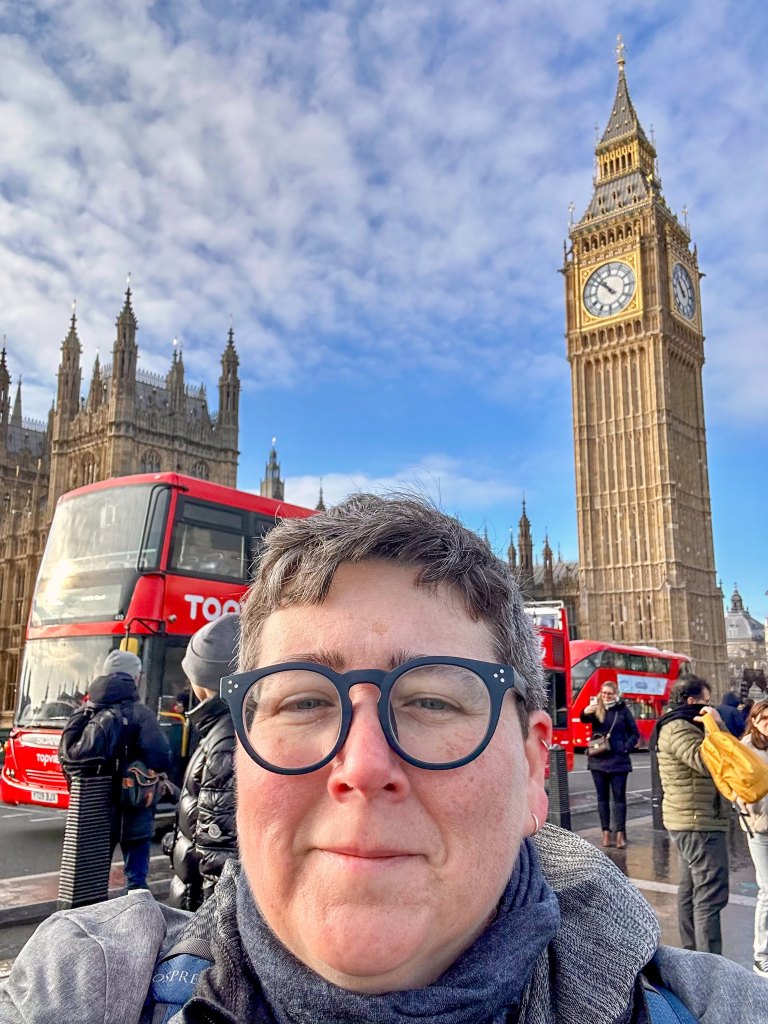
I will end where I began, with wisdom from Sally Gaze. Amidst all the wisdom she was sharing, it would have been easy to overlook this comment: “Make God the subject of the sentence.” When she said it, I quickly jotted it down in my notebook because it intrigued me. As I went through my week in London, I noticed how each person we met talked. They shared about their ministry, their church, and their context. They also named what God was doing in their ministry, their church, and their context.
Here is just a sample from my notebook:
- Fr. Ross (St. Eth’s) – “God calls us to be us, not someone else.”
- Rev. Sue Hughes (a Pioneer Priest in The Greenhouse) – “God is beginning to give me the imagination for my context and my faith.”
- Rev. Dr. Mike Moynagh (The Greenhouse) – “Relax and let the Spirit lead.”
- Rev. Phil Williams (St. Paul’s Shadwell) – “The gift of a secular culture is that it must be God making the growth. We create space for the Holy Spirit to move.”
Each person expected God to act, to call, to grow the community. Their language was not forced, but instead expressed their authentic, deep faith. They spoke of a God that was not a passive observer, but instead was an active participant that demanded to be the subject of the sentence.
My time spent learning from London, sent me home with questions for the Diocese of Alabama. Where is the Spirit leading us? What is God doing/making/transforming in our lives, our ministries, our churches, and our communities?
This article originally appeared in the First Quarter 2024 issue of The Alabama Episcopalian, Vol. 109, Issue 1.
 Notoriously Episcopalian